


Feeding a milking cow through the Indian summer
How to protect milk yield, appetite, and animal health when temperatures rise
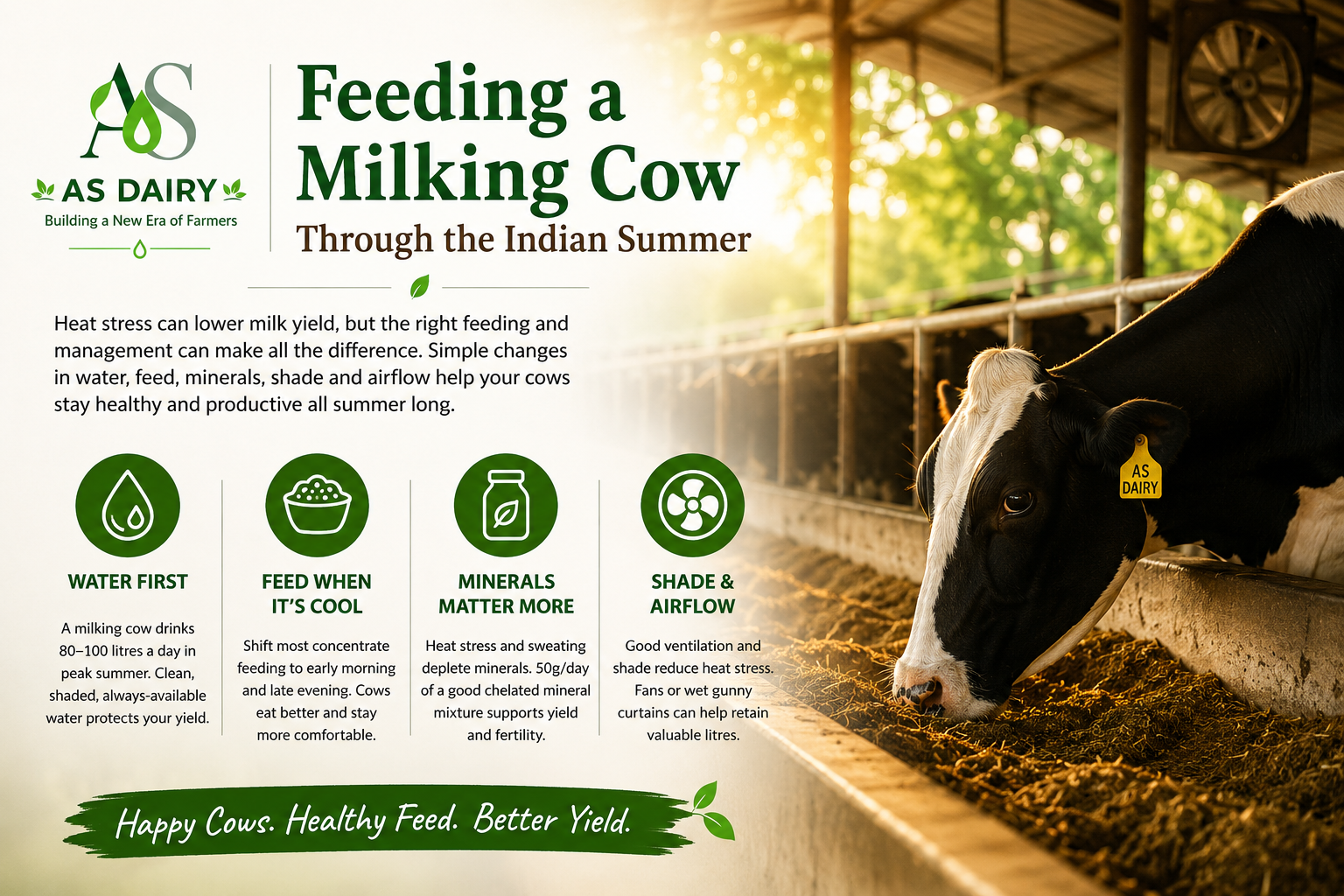
Summer can be one of the most challenging seasons for dairy farmers in India. As temperatures climb, cows eat less, drink more, and spend more energy trying to stay cool. The result can be lower milk production, reduced fertility, and animals that simply don't perform as well as they do during cooler months.
The good news is that good summer management can prevent much of this loss.
You don't necessarily need an expensive feeding system. In many cases, the biggest improvements come from getting the basics right: water, feeding times, minerals, shade, and airflow.
1. Water Comes First
A high-producing milking cow can drink a very large amount of water during peak summer, and her requirement increases significantly as temperature and milk production rise.
Water should be:
- Clean and fresh
- Available throughout the day
- Easily accessible
- Kept in the shade where possible
- Refilled regularly
Never allow the main water trough to remain empty during the hottest part of the day.
A cow that cannot drink when she needs to will reduce feed intake, and reduced feed intake can quickly translate into lower milk production.
A simple rule for summer
Don't make your cow wait for water.
If possible, provide multiple watering points so that dominant animals cannot prevent weaker animals from accessing water.
2. Feed When It Is Cooler
During the afternoon heat, cows naturally become less interested in eating.
This is why feeding times matter.
Instead of putting most of the day's feed in front of the animals during the hottest hours, shift more feeding activity toward:
Early morning + late evening
For example, depending on your farm routine:
- Early morning feeding after milking
- Smaller feed availability during the day
- Main concentrate feeding in the cooler evening hours
Fresh feed should be offered regularly and leftovers should be removed before they become spoiled.
Why does timing matter?
Eating and digestion generate heat inside the animal's body. During extreme temperatures, cows naturally try to reduce activities that create additional heat.
Giving them a comfortable environment and encouraging eating during cooler periods can help maintain intake.
3. Don't Ignore Minerals
Summer management isn't only about water and green fodder.
Heat stress, reduced feed intake, sweating, and heavy milk production can affect the animal's mineral balance.
A good-quality mineral mixture can be an important part of a balanced dairy ration.
However, mineral requirements vary according to breed, body weight, milk production, stage of lactation, feed composition, and local conditions.
Don't assume that one fixed quantity is suitable for every animal.
Work with a veterinarian or qualified livestock nutritionist to determine the appropriate mineral supplementation for your herd.
Remember
Minerals are not a replacement for good feed.
They work alongside:
Balanced ration + adequate water + proper minerals + good management
4. Green Fodder and Roughage Still Matter
Summer feeding should not become an excuse to reduce quality roughage.
The ration should provide appropriate amounts of:
- Green fodder
- Dry fodder
- Concentrate
- Mineral mixture
- Salt
- Clean drinking water
The exact quantity depends on the animal's body weight, milk yield, lactation stage, and the nutritional value of the available feed.
Sudden changes in the ration should also be avoided.
If you need to introduce a new feed, do it gradually so the animal's digestive system has time to adjust.
5. Keep the Shed Cool
A good ration cannot compensate for severe heat stress.
Your shed should allow air movement and ventilation.
Avoid designs that trap hot, humid air around the animals.
Useful measures include:
- Proper roof height
- Open sides where appropriate
- Fans for additional airflow
- Shade from direct sunlight
- Adequate space between animals
- Wet curtains or cooling systems where suitable
- Clean, dry resting areas
Fans are particularly useful when natural airflow is insufficient.
The goal isn't simply to make the shed look cool.
The goal is to help the animal lose body heat.
6. Don't Let Water Become Hot
A water trough sitting under direct sunlight can become extremely warm during the afternoon.
Where practical:
- Keep water tanks and troughs shaded
- Clean them regularly
- Refill them with fresh water
- Prevent manure and feed contamination
- Check water availability several times during the day
Clean, easily accessible water is one of the simplest investments you can make in summer dairy management.
7. Watch the Cow, Not Just the Thermometer
Every animal responds differently to heat.
Watch for signs such as:
- Excessive panting
- Open-mouth breathing
- Excessive salivation
- Reduced feed intake
- Increased standing
- Reduced activity
- Drop in milk production
- Changes in behaviour
Severe heat-stress signs require prompt attention from a veterinarian.
Don't wait until milk production has already fallen significantly before changing your summer management.
8. Protect the Evening Milking
Many farmers notice that summer heat affects the evening milk yield.
This is why the period between midday and evening deserves special attention.
Keep water available, provide shade and airflow, and avoid unnecessary handling or movement of animals during the hottest part of the day.
A comfortable animal is more likely to eat, rest, drink, and maintain production.
9. Summer Feeding Is About the Whole System
There isn't one magical feed that will prevent summer milk loss.
Good summer management is a combination of several small decisions:
Water → Feed timing → Balanced ration → Minerals → Shade → Airflow → Monitoring
When these work together, your animals have a much better chance of maintaining feed intake and milk production through the hot months.
A Simple Summer Routine
A practical farm routine could look something like this:
Early morning
- Check animals
- Provide clean water
- Milking
- Offer fresh feed and concentrate
- Check mineral supplementation
Late morning
- Check water availability
- Ensure shade and ventilation
- Avoid unnecessary animal handling
Afternoon
- Keep animals comfortable and hydrated
- Monitor signs of heat stress
- Maintain airflow
- Keep water available
Evening
- Offer fresh feed
- Provide concentrate according to the ration
- Milking
- Check water and animal condition
Night
- Ensure animals have access to clean water and comfortable resting areas
Final Thought
Summer milk loss is sometimes treated as unavoidable.
Some seasonal variation is normal—but good management can make a significant difference.
Start with the basics.
Keep water available. Feed strategically. Maintain a balanced ration. Provide minerals appropriately. Give your animals shade and airflow. And most importantly, watch your cows closely.
Because when summer gets tough, the farms that manage the basics well are often the farms that protect their litres.
A cool, hydrated and well-fed cow is a productive cow.
Note: Feeding quantities and mineral supplementation should be adjusted according to the animal's breed, body weight, milk production, lactation stage, existing ration, and local conditions. For a farm-specific ration, consult a qualified veterinarian or livestock nutritionist.