



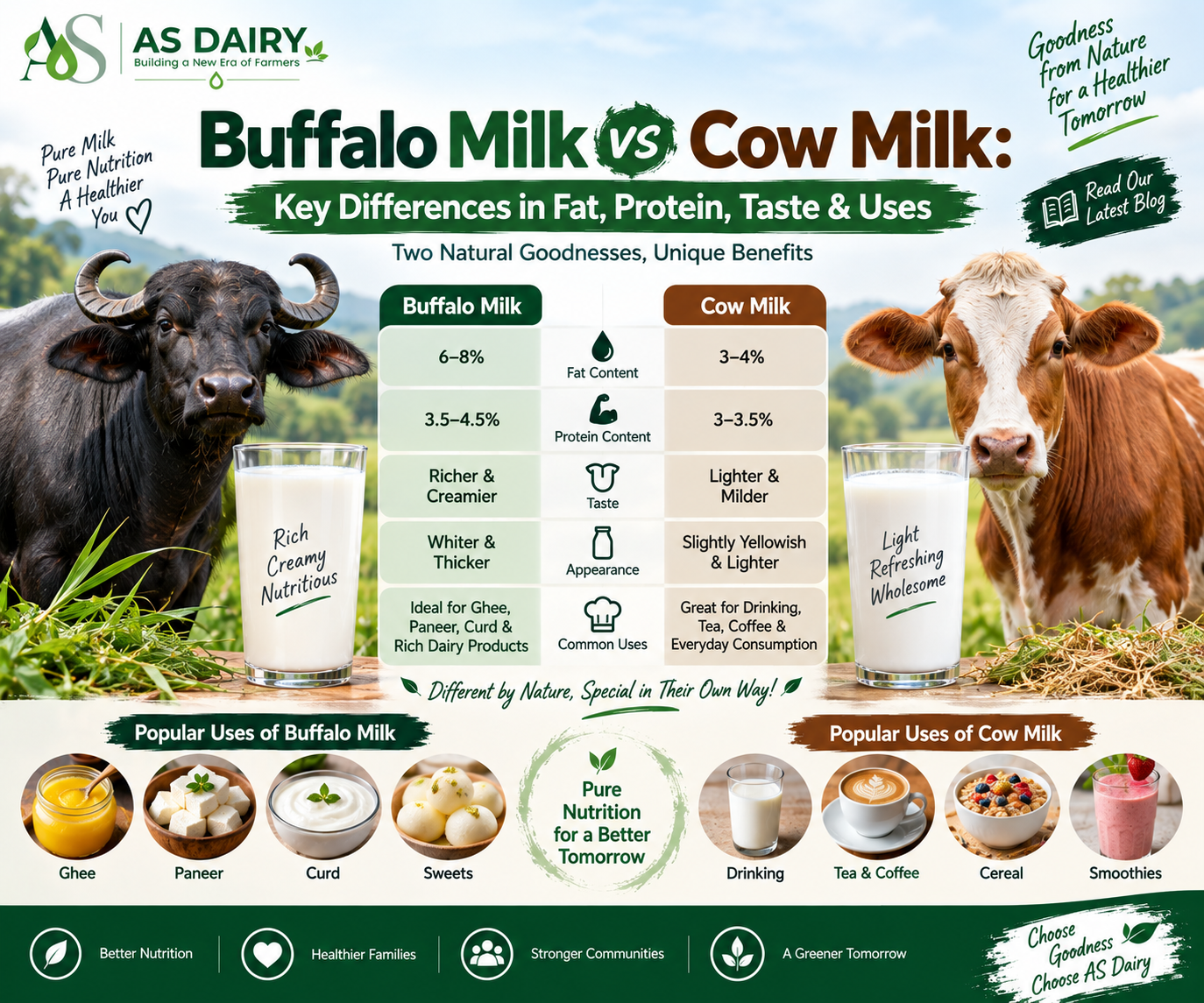
Buffalo Milk vs Cow Milk: Key Differences in Fat, Protein, Taste & Uses
Buffalo Milk vs Cow Milk: Key Differences in Fat, Protein, Taste & Uses
Milk is a regular part of many Indian households, but buffalo milk and cow milk have some important differences in their composition, texture, taste and common uses.
Understanding these differences can help you choose the type of milk that better suits your everyday needs.
What Is the Difference Between Buffalo Milk and Cow Milk?
Buffalo milk and cow milk differ mainly in their fat, protein, total solids and overall texture. Buffalo milk generally has a higher fat content, giving it a richer and creamier consistency, while cow milk is generally lighter in texture.
The exact composition of milk can vary depending on factors such as breed, feed, stage of lactation and farming conditions.
Buffalo Milk: What Makes It Different?
Buffalo milk is naturally rich and creamy. Its higher fat and total-solids content gives it a thicker texture compared with typical cow milk.
Because of its rich composition, buffalo milk is commonly used for making traditional dairy products such as paneer, curd, khoa, ghee and various Indian sweets.
Cow Milk: What Makes It Different?
Cow milk generally has a lighter consistency and is widely consumed as everyday drinking milk.
It is also used to prepare products such as curd, paneer, butter and other dairy products. The nutritional composition of cow milk can vary depending on the breed of cow and other farming conditions.
Buffalo Milk vs Cow Milk: Fat, Texture and Taste
One of the most noticeable differences between buffalo milk and cow milk is their fat content.
Buffalo milk generally contains more fat, which contributes to its richer taste and creamier texture. Cow milk generally has a lighter mouthfeel.
The taste of both types of milk can also vary depending on freshness, animal breed, feed and handling practices.
How Does Milk Fat Affect Dairy Products?
Milk fat plays an important role in the texture and richness of many dairy products.
The higher fat content of buffalo milk can make it particularly suitable for products where a rich and dense texture is desired.
This is one reason buffalo milk is commonly used in products such as paneer, khoa, curd and traditional sweets.
Which Milk Is Suitable for Different Uses?
The choice can depend on what you want to prepare.
Buffalo milk can be a good choice when you prefer a richer and creamier milk or when making dairy products that benefit from higher milk solids.
Cow milk may be preferred when you want a relatively lighter milk for everyday consumption.
There is no single choice that is right for everyone. Personal preference, dietary needs and the intended use of the milk all matter.
What Should You Check When Buying Fresh Milk?
The type of animal is only one factor when considering milk quality.
Consumers should also consider freshness, hygiene, proper handling, storage conditions and the reliability of the dairy source.
Good dairy practices begin with healthy animals and continue through hygienic milking, proper handling, storage and delivery.
At AS Dairy, we focus on building a responsible dairy ecosystem where animal care, farming practices and quality dairy products are connected.
Buffalo Milk vs Cow Milk: Which One Should You Choose?
Instead of asking which milk is universally better, it is more useful to consider which type suits your needs.
If you prefer a naturally richer and creamier milk, buffalo milk may be a suitable choice.
If you prefer a lighter milk, cow milk may better match your preference.
Both types of milk can be used in a variety of everyday foods and dairy preparations.
Frequently Asked Questions
Is buffalo milk thicker than cow milk?
Generally, buffalo milk has a thicker and creamier texture because it usually contains more fat and total solids than cow milk.
Does buffalo milk have more fat than cow milk?
Generally, yes. Buffalo milk typically has a higher fat content than cow milk, although the exact amount can vary.
Is buffalo milk good for making paneer?
Buffalo milk is commonly used for paneer because its rich composition can help produce a firm and rich-textured dairy product.
Can buffalo milk and cow milk both be used for daily consumption?
Yes, both are commonly consumed as milk. Individual preferences, dietary requirements and tolerance should be considered when choosing milk.
Why does buffalo milk look and feel creamier?
The relatively higher fat and total-solids content of buffalo milk contributes to its richer and creamier appearance and texture.
Conclusion
Buffalo milk and cow milk both have an important place in dairy consumption. Their differences in fat, protein, texture and composition make them suitable for different preferences and dairy applications.
Understanding where milk comes from and how it is handled can help consumers make more informed choices.
At AS Dairy, our approach connects responsible farming, animal care and quality dairy products to create a trusted farm-to-family dairy ecosystem.
Explore AS Dairy and discover our approach to fresh and quality dairy products.